
Request Your Free Quote Now

Thank you! Your submission has been received!
Oops! Something went wrong while submitting the form.
Your information is safe with us - we will never spam you or share your details

Preliminary Roost Assessment.

Clear, compliant preliminary roost assessments carred out by experienced ecologists across the UK.

get a quote
get a quote
Trusted by
100+ Clients
Preliminary roost assessment services
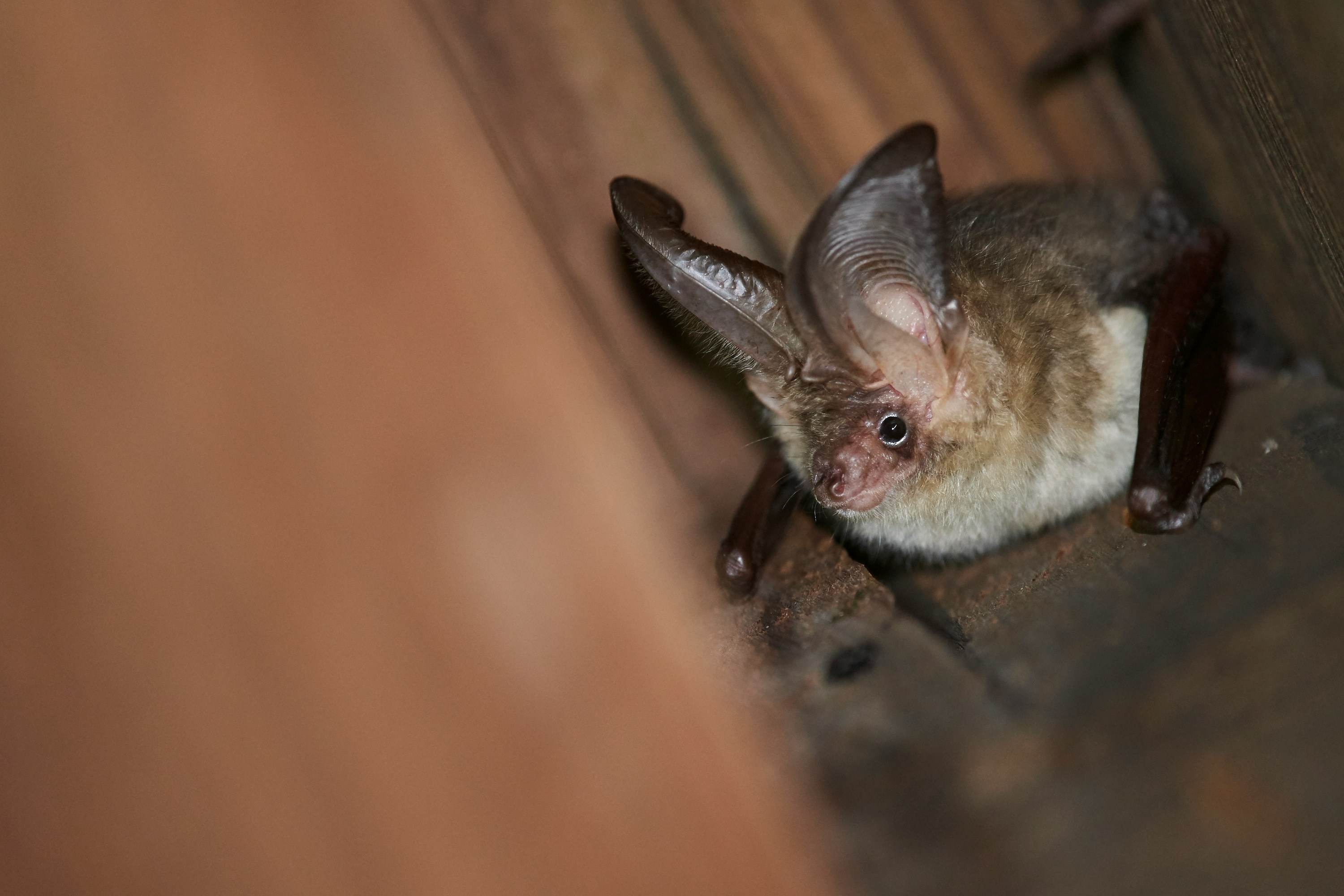
A Preliminary Roost Assessment—sometimes called a bat scoping survey—is the essential first stage of any bat survey. It determines whether a site or structure has the potential to support roosting bats before building, demolition, or renovation works begin.
How Preliminary roost assessments work
Survey Planning
Book in the site visit, our ecologist will come out to site
On‑site Observations
Licensed surveyors monitor potential roost features
Write up
Following the site visit our ecologist will write up their findings
Issue report
Report issued within a couple of days following the site visit

Key objectives of a PRA (preliminary roost assessment)

A Preliminary Roost Assessment is designed to provide a thorough understanding of how bats may use a site, both inside structures and across the wider landscape. Below is a deeper look at each primary objective:
  • Identify Potential Roost Features (PRFs), External Building Features: Gaps behind fascia boards, loose roof tiles, soffits, lifted lead flashing, and mortar cracks. Internal Spaces: Loft voids, attic beams, and cavity walls where bats can rest undisturbed. Natural Structures: Mature trees with rot holes, split limbs, or peeling bark that create natural roosting cavities.
  • Assess Surrounding Habitat : Bats rarely stay confined to a single roost; they depend on a network of foraging areas and commuting routes. During the PRA we evaluate, Foraging Habitat Quality: Hedgerows, woodland edges, watercourses, and meadows that provide rich insect food sources.  Connectivity & Corridors: Linear features such as tree lines, hedges, or riverbanks that guide bats safely between feeding sites and roosts.  Lighting Impacts: Existing or proposed artificial lighting that could disturb nocturnal behaviour or cut off flight paths.
  • Highlight Legal Constraints and Compliance, All UK bat species are fully protected under the Wildlife and Countryside Act 1981 and the Conservation of Habitats and Species Regulations 2017. This means it is illegal to:  Deliberately capture, injure, or kill a bat.  Damage, destroy, or obstruct access to a bat roost—even when bats are not present.  Disturb bats while they occupy a roost.
“We came to them with a complex logistics challenge. Not only did they understand it faster than anyone else, they built a solution that’s saving us time, money, and emissions—every single day.”
Importance of bat emergence surveys
What You Receive
What you'll receive from us when providing a bat emergence survey
External & Internal Inspection: Licensed ecologists examine all relevant structures—roof voids, loft spaces, eaves, fascias, and surrounding trees—for Potential Roost Features (PRFs).
Photographic Evidence: High-resolution images of key findings and features for easy reference.
Habitat Evaluation: Assessment of foraging corridors, commuting routes, and nearby water or woodland habitats.
Risk Assessment & PRF Classification: Each feature rated (negligible, low, moderate, or high roost potential) following current Bat Conservation Trust (BCT) guidelines.
Clear Recommendations: Next steps such as dusk/dawn emergence surveys, mitigation measures, or licensing requirements.
Why Choose Us
Why you should choose to use our services
Experienced, Licensed Ecologists: Bat surveyors accredited by Natural England.
Rapid Turnaround: Clear, concise reports to keep your planning application on track.
Comprehensive Ecology Services: From Preliminary Ecological Appraisals (PEA) to full Ecological Impact Assessments (EcIA), we manage every stage.

Typical Scenarios Requiring a Preliminary Roost Assessment

A PRA is needed whenever planned works could disturb bats or their roosting habitats. Below are the most common situations where planning authorities or ecological consultants will recommend (or legally require) this survey.
  • Residential Renovations and Extensions
  • Demolition or Redevelopment Projects
  • Tree Works and Forestry Operations
  • Infrastructure and Utilities Projects
  • Commercial Property Maintenance
  • Planning Permission & Change of Use
“We came to them with a complex logistics challenge. Not only did they understand it faster than anyone else, they built a solution that’s saving us time, money, and emissions—every single day.”
“We recently needed a bat emergence survey before starting our loft conversion, and the Gradwell Group team made the whole process effortless.

From the first call, they explained every step clearly and scheduled the survey quickly. The ecologists arrived on time, set up discreet equipment, and were happy to answer all our questions about the bats they observed.

The report was detailed, easy to understand, and accepted without any issues by the planning authority.

Weather conditions for
bat emergence surveys

Bats are highly sensitive to weather, and their activity levels vary considerably with changes in temperature, wind, and rainfall. To ensure that surveys capture reliable levels of bat activity, strict weather criteria must be met.
  • Surveys are generally only valid when evening temperatures remain above 10°C
  • No heavy or prolonged rain should occur during the survey period.
  • Low wind speeds are essential, ideally below Beaufort scale 2.
  • Partial cloud cover can actually favour bat emergence, providing protection from predators.
“We came to them with a complex logistics challenge. Not only did they understand it faster than anyone else, they built a solution that’s saving us time, money, and emissions—every single day.”
[our purpose]
Lifecycle builds smarter systems for a cleaner, faster, more resilient global economic environment.
arrow rightarrow right
See industries
[Help & Support]
Frequently
Asked Questions
If you don’t see your question here, we’re always available to help. Get in touch to discuss your needs, explore opportunities, or clarify how we work.
arrow rightarrow right
get in touch
What industries does Lifecycle specialize in?
arrow up
We design the infrastructure, systems, and strategies that accelerate the transition to clean energy—without disrupting operations. From grid-edge logistics hubs to on-site generation and storage, our consulting work helps organizations integrate renewables intelligently and at scale.

Whether you’re deploying solar at distribution centers or incorporating wind into regional supply chains, we bring the technical depth and sector insight to turn ambition into impact.
Can you help us meet sustainability targets?
arrow up
We design the infrastructure, systems, and strategies that accelerate the transition to clean energy—without disrupting operations. From grid-edge logistics hubs to on-site generation and storage, our consulting work helps organizations integrate renewables intelligently and at scale.

Whether you’re deploying solar at distribution centers or incorporating wind into regional supply chains, we bring the technical depth and sector insight to turn ambition into impact.
How is your approach different from traditional consulting firms?
arrow up
We design the infrastructure, systems, and strategies that accelerate the transition to clean energy—without disrupting operations. From grid-edge logistics hubs to on-site generation and storage, our consulting work helps organizations integrate renewables intelligently and at scale.

Whether you’re deploying solar at distribution centers or incorporating wind into regional supply chains, we bring the technical depth and sector insight to turn ambition into impact.
Do you offer technical implementation or just strategy?
arrow up
We design the infrastructure, systems, and strategies that accelerate the transition to clean energy—without disrupting operations. From grid-edge logistics hubs to on-site generation and storage, our consulting work helps organizations integrate renewables intelligently and at scale.

Whether you’re deploying solar at distribution centers or incorporating wind into regional supply chains, we bring the technical depth and sector insight to turn ambition into impact.
Are your solutions scalable for global operations?
arrow up
We design the infrastructure, systems, and strategies that accelerate the transition to clean energy—without disrupting operations. From grid-edge logistics hubs to on-site generation and storage, our consulting work helps organizations integrate renewables intelligently and at scale.

Whether you’re deploying solar at distribution centers or incorporating wind into regional supply chains, we bring the technical depth and sector insight to turn ambition into impact.
How do we get started with Lifecycle?
arrow up
We design the infrastructure, systems, and strategies that accelerate the transition to clean energy—without disrupting operations. From grid-edge logistics hubs to on-site generation and storage, our consulting work helps organizations integrate renewables intelligently and at scale.

Whether you’re deploying solar at distribution centers or incorporating wind into regional supply chains, we bring the technical depth and sector insight to turn ambition into impact.